

The ‘Mom Body’ Myth: Why Postpartum Bodies Need Recovery, Not Pressure
| Quick Answer A postpartum body has gone through 9 months of hormonal change, muscle separation, and pelvic floor strain. The pressure to ‘bounce back’ is not only unrealistic — it can delay healing. Treatments like Emlux (muscle restoration), Liposhape (lymphatic body contouring), and PrimeSculpt (non-invasive body sculpting) are designed to support recovery, not rush it. They work with your body’s healing timeline, not against it. |
Somewhere between the hospital discharge and the first visit from well-meaning relatives, a quiet pressure begins to build.
“When are you going to get your body back?”
Here is the truth nobody says loudly enough: you did not lose your body. You used it to build a human being. What you are living in now is not a before-state waiting to be corrected — it is a body that has been through something extraordinary, and it deserves extraordinary care.
This article is not about bouncing back. It is about what is actually happening inside a postpartum body, why so many mothers still feel disconnected from themselves months after birth, and what evidence-based treatments can genuinely help — on your timeline, at your pace.
What Really Happens to Your Body After Birth
The postpartum period — clinically the first 12 months after delivery — involves a cascade of physical changes that are rarely fully explained. Understanding them is the first step to treating them correctly.
Hormonal Shifts: The Internal Weather Change
During pregnancy, oestrogen and progesterone surge to levels many times higher than normal. After birth — particularly after the delivery of the placenta — these hormones drop sharply within 24 to 72 hours.
This hormonal withdrawal affects almost every system in the body:
- Water retention increases, causing puffiness that many mistake for fat gain
- Metabolism slows as thyroid hormones recalibrate over weeks and months
- Collagen production decreases, affecting skin elasticity and joint stability
- Mood regulation is disrupted — contributing to postpartum blues or depression
- Breast tissue changes regardless of whether a mother chooses to breastfeed
These changes can persist for 6 to 18 months. This is not a weakness. It is biology — and it cannot be outworked, out-dieted, or rushed.
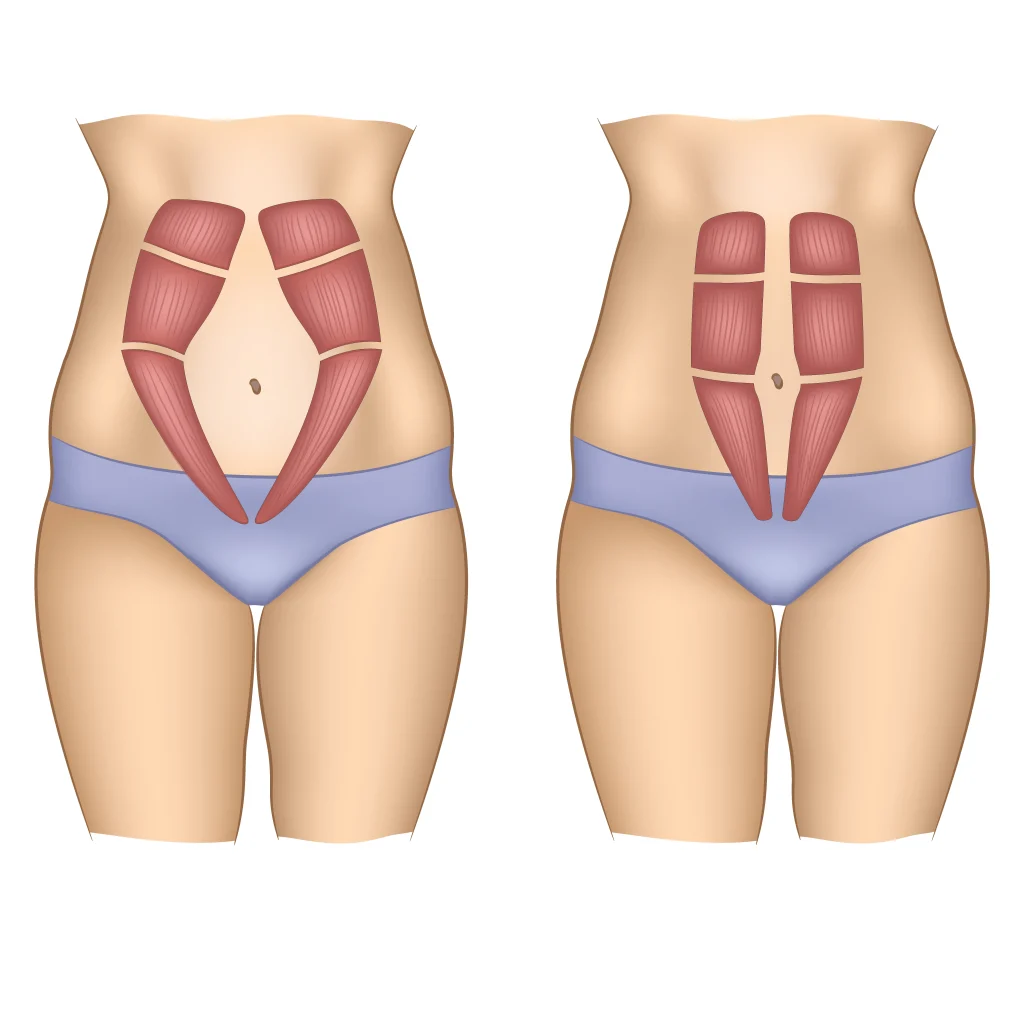
Diastasis Recti: The Muscle Separation Nobody Talks About
Diastasis recti is the separation of the two bands of abdominal muscle (the rectus abdominis) that run down the centre of the stomach. It affects an estimated 60% of women during pregnancy, and up to 39% still experience it six months postpartum.
Why does this matter? Because diastasis recti:
- Creates the persistent ‘belly pooch’ that does not respond to exercise or dieting
- Weakens core stability, contributing to lower back pain
- Cannot be corrected by standard ab exercises — crunches and sit-ups can actually make it worse
- Affects posture and body alignment long after birth
| 💡 Important to Know If you have diastasis recti, traditional ‘core workouts’ may widen the gap rather than close it. Always get assessed by a professional before beginning any postpartum exercise programme. |
Pelvic Floor Weakness: The Silent Struggle
The pelvic floor is a group of muscles, ligaments, and connective tissue forming the base of the pelvis. During pregnancy, it supports the growing baby — and during vaginal delivery, it undergoes significant stretching and potential tearing.
Signs of pelvic floor weakness after birth include:
- Leaking urine when coughing, laughing, or exercising (stress incontinence)
- A feeling of heaviness or pressure in the pelvis
- Reduced sensation or discomfort during intimacy
- Difficulty engaging the core even during gentle movement
- Lower back and hip pain that persists beyond general postnatal recovery
Pelvic floor care is not a luxury — it is a medical necessity. Yet it is one of the least-discussed aspects of postpartum recovery, and many mothers wait years before addressing it.
Debunking the ‘Bounce Back’ Myth
The phrase ‘bounce back’ implies that your pre-pregnancy body was your ‘real’ body and that the postpartum version is a temporary glitch. This framing is not just inaccurate — it is harmful.
Here is what the research tells us:
- The average time for full postpartum physical recovery is 12 to 18 months
- Hormonal balance may not fully restore until 6 months after breastfeeding ends
- Bone density changes caused by lactation can take 12+ months to reverse
- Pelvic floor muscles, if torn or overstretched, require structured rehabilitation — not passive time
Pressure to lose weight or ‘get toned’ too soon can trigger or worsen diastasis recti, delay pelvic floor healing, and contribute to postpartum anxiety. The kindest and most effective approach works with your body’s recovery timeline — not against it.
| 🌸 A Note to Every Mother Reading This Your body is not broken. It is not ‘before’ anything. It grew and delivered a new human life — and that deserves recognition, not a programme designed to erase it. Recovery is not about returning. It is about rebuilding, with knowledge and care. |
Postpartum Treatments That Support Recovery — Not Rush It
The right postpartum treatments do not pressure you to look a certain way. They address real physiological needs: restoring muscle function, supporting lymphatic drainage, reducing inflammation, and rebuilding structural integrity.
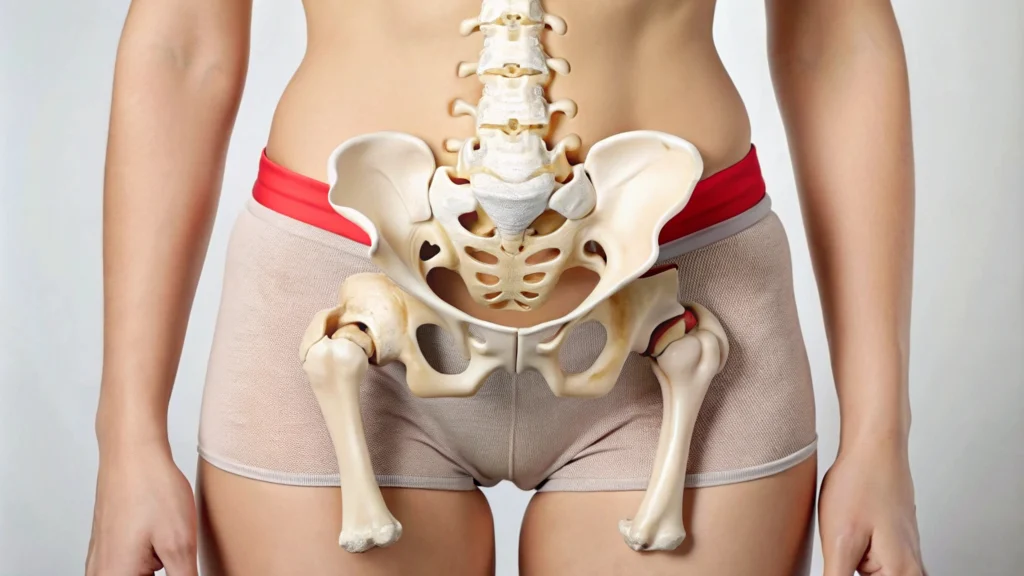
Emlux |Pelvic Floor Care + Core Muscle Restoration
Emluv is a non-invasive electromagnetic muscle stimulation treatment that targets deep core and pelvic floor muscles simultaneously — without surgery, recovery time, or physical effort.
- Delivers thousands of supramaximal muscle contractions per session — equivalent to an intensive workout the pelvic floor cannot perform voluntarily in early recovery
- Specifically addresses diastasis recti by re-engaging the transverse abdominis and encouraging separated muscles to draw back toward midline
- Strengthens pelvic floor muscles to reduce or eliminate stress urinary incontinence
- Safe to begin from 6 to 8 weeks postpartum after medical clearance — typical course of 4 to 6 sessions
- No downtime — sessions are performed while fully clothed and lying comfortably
Ideal for: Mothers experiencing core weakness, diastasis recti, stress incontinence, pelvic heaviness, or lower back pain rooted in postpartum muscle dysfunction. Emlux addresses the internal structural causes — not just the surface appearance.
Liposhape|Lymphatic Body Contouring + Fluid Reduction
Liposhape is a body contouring treatment that combines radiofrequency energy, vacuum therapy, and mechanical massage to stimulate the lymphatic system, reduce fluid retention, and support natural body reshaping.
- Targets persistent fluid retention and localised swelling common in the first 12 months postpartum
- Stimulates lymphatic drainage to reduce puffiness and heaviness in the abdomen, thighs, and hips
- Radiofrequency energy gently heats deep tissue, encouraging collagen remodelling and skin tightening after pregnancy stretching
- Addresses loose skin around the abdomen, flanks, and thighs — a concern that diet and exercise alone cannot fully resolve
- Non-invasive with no downtime; each session is approximately 45 to 60 minutes
Ideal for: Mothers dealing with postpartum fluid retention, loose or crepey skin around the abdomen, or body composition changes that have not responded to lifestyle adjustments. Liposhape supports the body’s natural slimming process rather than forcing change.
PrimeSculpt |Non-Invasive Body Sculpting + Muscle Toning
Primesculpt is an advanced body sculpting treatment combining high-intensity focused electromagnetic technology with radiofrequency — simultaneously building muscle and reducing localised fat deposits.
- Targets the abdomen, flanks, arms, and thighs — the areas most affected by postpartum body composition changes
- Builds and tones muscle while simultaneously reducing fat cells, addressing both structural and aesthetic aspects of recovery
- Particularly effective for the lower abdominal area that remains soft even after weight loss — often due to separated or weakened deep core muscles
- Supports restoration of a natural body silhouette without aggressive intervention
- Typical course of 4 sessions over 2 weeks; results continue to develop over the following 3 months
Ideal for: Mothers who are past the early recovery stage — typically 3+ months postpartum — and want to actively restore body composition by building functional strength while contouring areas most changed by pregnancy.
Which Postpartum Treatment Is Right for You?
| Your Concern | Emlux | Liposhape | PrimeSculpt |
|---|---|---|---|
| Pelvic floor weakness | ✅ Best | ⚠️ Partial | ⚠️ Partial |
| Diastasis recti | ✅ Best | ⚠️ Support | ✅ Yes |
| Fluid retention / swelling | ⚠️ Partial | ✅ Best | ⚠️ Support |
| Loose skin after pregnancy | ⚠️ Support | ✅ Best | ✅ Yes |
| Stubborn fat deposits | ⚠️ Minimal | ✅ Yes | ✅ Best |
| Core strength restoration | ✅ Best | ⚠️ Partial | ✅ Yes |
| Body sculpting / slimming | ⚠️ Support | ✅ Yes | ✅ Best |
| Safe at 6–8 wks postpartum | ✅ Yes | ✅ Yes | ⚠️ Consult |
Frequently Asked Questions About Postpartum Body Recovery
When can I start postpartum body treatments?
It depends on the treatment. Emlux and Liposhape can typically begin from 6 to 8 weeks postpartum after doctor clearance. PrimeSculpt is generally recommended from 3 months postpartum, once initial tissue healing is complete. Always consult your healthcare provider before beginning any postpartum treatment.
Is body sculpting safe after a C-section?
Yes, with appropriate timing. C-section recovery requires additional healing of the incision site. Most practitioners recommend waiting at least 3 months before applying treatments near the scar, and up to 6 months for treatments directly over it. Emlux, which targets internal muscle function, can often begin earlier. Always disclose your C-section history to your treatment provider.
What is the best treatment for pelvic floor weakness after birth?
Emlux is specifically designed for postpartum pelvic floor care. It uses electromagnetic muscle stimulation to deliver deep, targeted contractions — restoring strength and function that standard Kegel exercises alone may not achieve, particularly where significant stretching or tearing occurred during delivery. A typical course is 4 to 6 sessions.
Will slimming treatments help with loose skin after pregnancy?
Liposhape can significantly improve the appearance of loose or crepey skin by stimulating collagen production through radio-frequency energy. However, deep stretch marks involve dermal layer changes that require specialist treatments for significant improvement. A consultation will identify the right combination for your specific skin concerns.
How many postpartum sessions before seeing results?
Most clients notice changes from the second or third session. A standard course is 4 to 6 sessions over 3 to 6 weeks. The body continues to respond and remodel for up to 3 months after completing the course — meaning final results are often better than what you see immediately after the last session.
Recovery Is Not a Race — It Is a Right
Every mother deserves to feel strong, supported, and at home in her body. Not because her body looks a certain way — but because it functions well, feels good, and carries her through the life she is building.
Postpartum recovery is not about erasing evidence of pregnancy. It is about rebuilding from the inside out — restoring muscle function, rebalancing structure, and reclaiming physical confidence at a pace that respects what your body has been through.
Emlux, Liposhape, and PrimeSculpt are not about pressure or appearance. They are tools for recovery. Used at the right time, with the right guidance, they support the kind of healing that allows you to feel like yourself again.
You are not behind. You are exactly where you are supposed to be.